According to sources cited by ETNews, Samsung Electronics has successfully resolved one of the most critical technical challenges in its SOCAMM2 design: the “warpage” issue, a major barrier to mass production.
Warpage refers to the slight deformation of components caused by uneven thermal expansion during high-temperature manufacturing processes. This issue is particularly severe in SOCAMM2 due to its complex module structure, which integrates LPDDR5X chips and uses bolt-based compression, increasing the risk of connection failures.
To address this, Samsung applied its in-house low-temperature solder (LTS) technology, reducing processing temperatures from above 260°C to below 150°C. This significantly minimizes thermal mismatch between materials, effectively mitigating warpage.
In addition, Samsung introduced several design optimizations. The die structure was redesigned from a dual-tower to a single-tower configuration to improve mechanical stability. The company also optimized the epoxy molding compound (EMC) and leveraged high-precision simulation models to better predict and control warpage behavior.
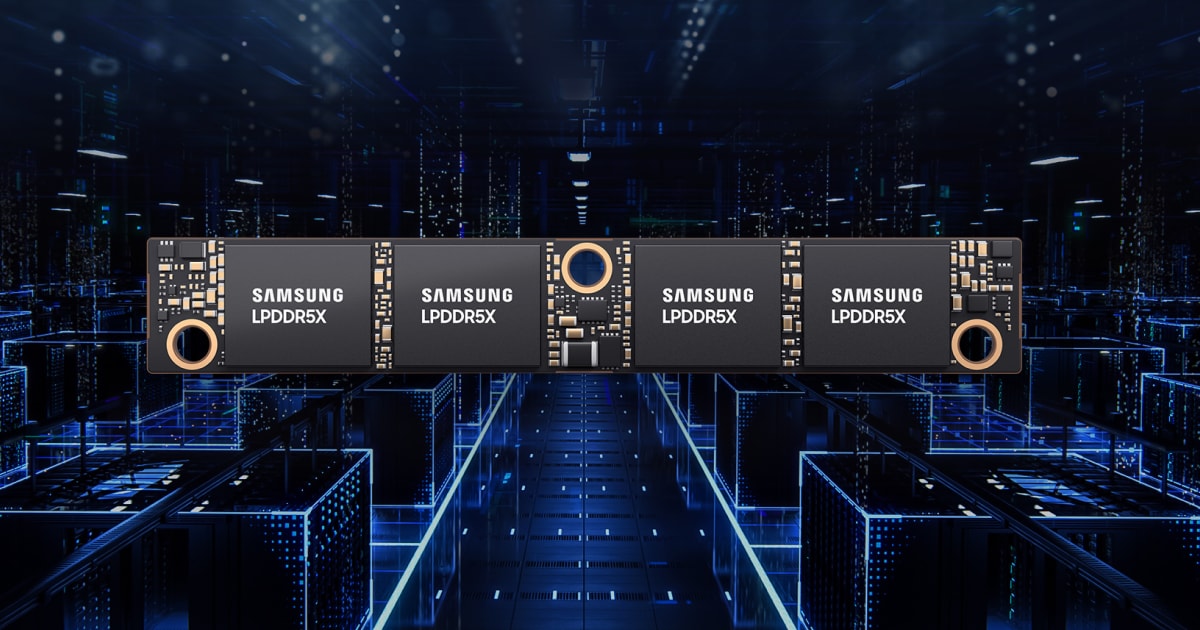
SOCAMM2 is a low-power memory module designed to work alongside HBM in NVIDIA Vera Rubin, the upcoming AI platform from NVIDIA. By overcoming this technical hurdle, Samsung is now positioned with a clear advantage in both development progress and mass production readiness.
Competition in the SOCAMM2 segment is intensifying. According to The JoongAng, Samsung is targeting mass production of 192GB modules and could supply up to 50% of NVIDIA’s demand, equivalent to around 10 billion Gb.
Meanwhile, SK hynix is accelerating its transition to next-generation 1c DRAM to expand its AI memory portfolio. At the same time, Micron Technology has taken an early lead by shipping the world’s first 256GB SOCAMM2 samples, offering approximately 33% higher capacity compared to current 192GB flagship products.
Overall, SOCAMM2 is emerging as a new battleground in the AI memory space, where competition is no longer just about performance, but also about scalability, manufacturing capability, and speed to market. Samsung’s latest breakthrough signals a strong push to lead the next phase of AI infrastructure.
