Intel’s collaboration with Tesla in the Terafab project highlights its ambition to build a large-scale chip manufacturing ecosystem in the United States, as AI demand continues to surge.
The tech world has just witnessed a “seismic shift” as Intel officially announced its participation in Elon Musk’s Terafab mega-project. This milestone not only marks a historic turning point for Intel Foundry but also poses a direct threat to TSMC’s global dominance.
A long-anticipated alliance of giants
The Terafab mega-project was detailed just days ago by Tesla’s CEO, aiming to deliver up to 1 terawatt (TW) of computing capacity per year to support robotaxis, humanoid robots, and data centers.
However, industry experts quickly pointed out that despite its vast financial resources, Tesla remains relatively new to semiconductor hardware manufacturing. Partnering with an experienced player with established intellectual property (IP) and fab operations is therefore essential.
Intel has officially been “entrusted” with this role, joining forces with Musk’s other companies such as SpaceX and xAI. The strategic decision was proudly confirmed by Intel on platform X, opening a new chapter for both sides.
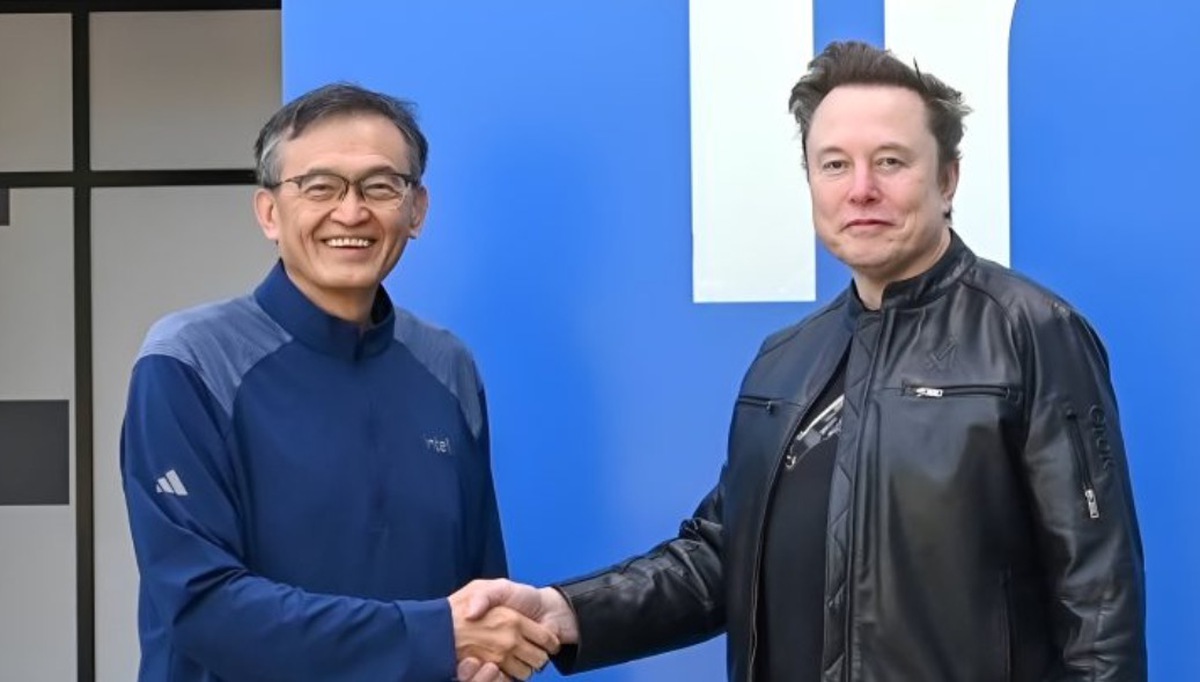
At its core, Terafab aims to reduce U.S. tech companies’ reliance on overseas foundry partners and move toward building a domestic manufacturing network at a scale far beyond current facilities.
“Elon Musk has repeatedly proven his ability to reshape entire industries. That is exactly what the semiconductor manufacturing sector needs right now,” an Intel executive noted.
According to Intel’s CEO, the Terafab project could drive a major transformation in how silicon chips are produced, spanning processing, memory, and advanced packaging technologies in the future.
“Intel is proud to partner and collaborate closely with Elon on this highly strategic initiative.”
In theory, the partnership is highly complementary: Musk brings massive capital and infrastructure, while Intel provides core technology expertise.
Intel’s biggest advantage in the deal is its 18A process, already in production at Fab 52 in Arizona since Q4 last year. Under the agreement, Intel will support Tesla in establishing facilities in Austin, Texas, applying its foundry model to accelerate mass production.
The 18A process is expected to be licensed for manufacturing Tesla’s next-generation AI6 chips. In addition, advanced packaging technologies such as EMIB may also be deployed in Texas, aiming to build a fully integrated manufacturing ecosystem.
Although revenue-sharing details have not been disclosed, the agreement clearly lays the foundation for an unprecedented scale of chip production and signals a new era of intense competition in the global semiconductor industry.
