As global memory supply becomes increasingly constrained, both Samsung Electronics and SK hynix are ramping up investments in China, with major upgrades to their NAND production facilities drawing significant attention.
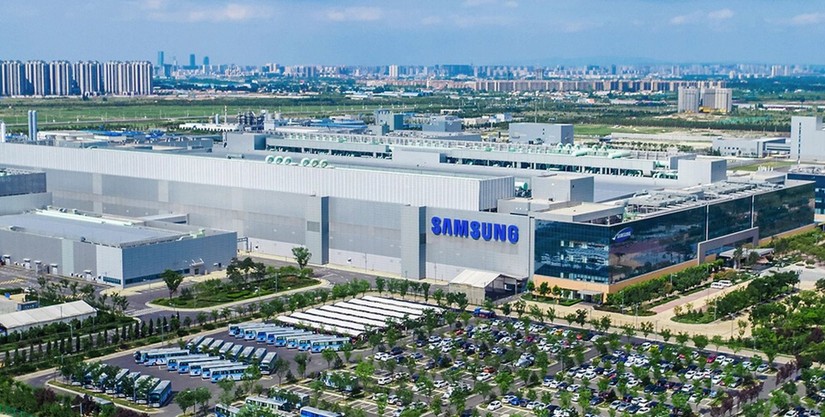
According to ETNews, Samsung has completed the first phase of its process transition at its Xi’an plant, gradually phasing out older 128-layer (V6) NAND while scaling up mass production of 236-layer (V8) products. Looking ahead, the company is reportedly planning a further upgrade at the Xi’an Phase 2 (X2) facility, which is expected to adopt 286-layer (V9) NAND technology. This transition is projected to be completed by 2026, paving the way for large-scale production of next-generation V9 chips.
Data from TrendForce indicates that China is expected to account for roughly 30–35% of Samsung’s total NAND output in 2025. With these upgrades, the Xi’an facility is set to significantly boost production of advanced V8 and V9 NAND products.
The shift is being driven in part by weakening demand for legacy memory products, alongside rapid technological progress from Chinese competitors. Reports suggest that leading Chinese NAND manufacturers have already entered mass production of 294-layer NAND, making it increasingly difficult for older 100+ layer technologies to remain competitive.
For context, Samsung is currently mass-producing V9 NAND at its Pyeongtaek campus and is also preparing for V10 generation chips, which are expected to exceed 400 layers.
Geopolitical factors are also playing a role. Tighter U.S. restrictions on exports of advanced semiconductor equipment to China may have accelerated Samsung’s transition strategy. Although the company retains its “Validated End User” (VEU) status, it has reportedly been required to obtain annual approvals from the U.S. government since late 2025.
Meanwhile, SK hynix is moving forward with plans to revive NAND investment at its Dalian facility. According to The Bell, discussions to restart expansion gained momentum in the second half of 2025, supported by a recovery in NAND prices and a rebound in the DRAM cycle.
SK hynix’s NAND production capacity had previously been reduced after converting its Cheongju M15 fab to DRAM during the downturn. Other facilities, including M15X and the first phase of its Yongin site, are also expected to focus on DRAM, limiting available capacity for NAND production.
As a result, the Dalian Phase 2 fab has effectively become the company’s only viable option for expanding NAND output. Equipment installation at this site is expected to begin in the second half of 2026.
At the same time, upgrades to the existing Dalian Phase 1 facility are also under consideration. Currently operating on 192-layer NAND, the fab lags behind SK hynix’s latest 321-layer technology by more than two generations. The company is therefore reportedly evaluating a transition to 200+ layer NAND at this site.
Regulatory pressures may also be influencing SK hynix’s strategy in China. Conditions imposed by China’s State Administration for Market Regulation following its acquisition of Intel’s NAND business continue to shape production decisions, including requirements related to maintaining output of PCIe and SATA-based enterprise SSDs.
According to TrendForce, China is expected to account for approximately 40–45% of SK hynix’s total NAND production in 2025, underscoring the strategic importance of its operations in the region.
