Phison has begun requiring customers to pay earlier or within significantly shorter timeframes as the ongoing NAND supply crunch intensifies across the SSD ecosystem.
Just weeks after the company’s CEO revealed that at least one NAND manufacturer was requesting advance cash payments from its clients, the pressure has now reached Phison itself. A report from DigiTimes Asia indicates that Phison is responding by revising its own payment policies, asking customers for upfront payments or compressed settlement schedules.
In a notice to partners, the company explained that its primary suppliers recently shifted to advance-payment models or shortened payment cycles. It also noted that Phison had been providing financial flexibility to support customer orders in recent months. The implication is clear: Phison may have already prepaid some of its NAND supply and is now compelled to share the financial burden downstream.
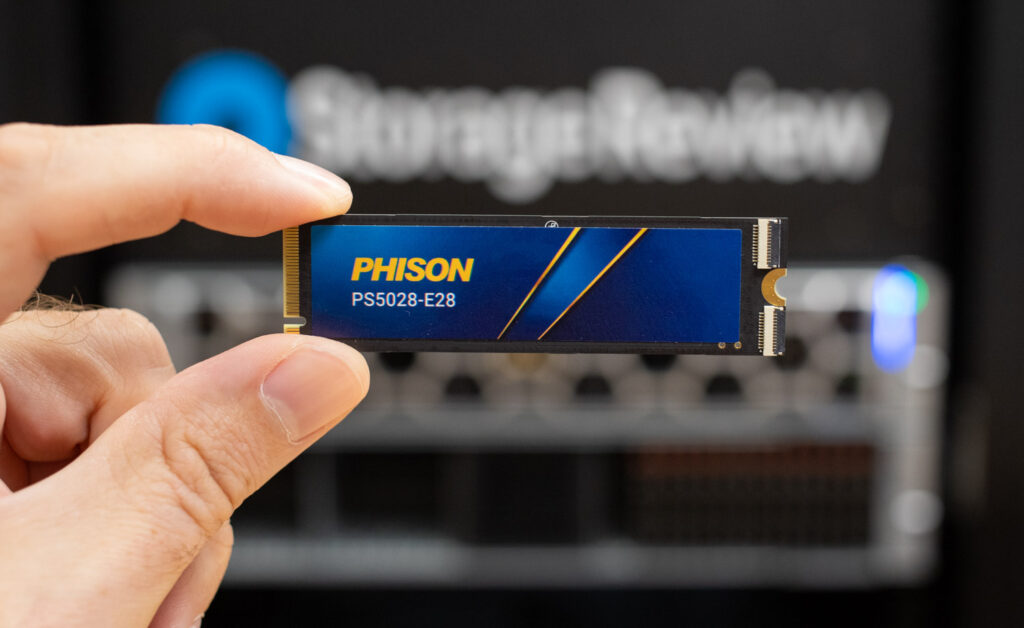
While widely recognized for its SSD controllers, Phison also manufactures complete storage drives, particularly for enterprise and automotive clients. This broader exposure makes the company more vulnerable to volatile NAND pricing and supply disruptions.
The tougher stance on payments comes amid a dramatic escalation in NAND flash prices. Market estimates suggest current spot pricing is roughly three to four times higher than in Q2 2025, with no clear signals of stabilization in the near or mid-term horizon.
The ripple effects are industry-wide. SanDisk and Kioxia are reportedly seeking advance payments for long-term supply agreements, mirroring strategies seen among DRAM producers. Samsung, the largest NAND vendor globally, has already shifted to quarterly price renegotiations, and it would not be surprising if it also adopts stricter prepayment requirements.
Phison’s communication does not specify which customer segments will face mandatory prepayment versus shorter credit windows, indicating that terms will likely be determined case by case. Allocation priorities may also come into play, particularly for larger clients, as the company referenced the ongoing volatility driven by rapid expansion in AI infrastructure demand.
