After years of focusing on GPUs and AI, NVIDIA is preparing to enter the consumer laptop chip market, a space long dominated by Intel and AMD. This move is not just about expanding its product portfolio, but also reflects NVIDIA’s ambition to lead in the rapidly growing era of AI PCs and edge AI.
Why is NVIDIA entering the laptop market now?
For years, NVIDIA has primarily focused on discrete GPUs for gaming and workstations. However, a significant portion of today’s laptop market relies on integrated SoCs that combine CPU and GPU, a segment where NVIDIA has had limited presence.
According to CEO Jensen Huang, around 150 million laptops are sold globally each year. This represents a massive market that has yet to fully benefit from the advanced GPU technologies NVIDIA offers.
By entering the laptop space, NVIDIA is not only unlocking a new revenue stream but also bringing its AI ecosystem closer to end users.
AI PCs and the opportunity to reshape the market
The AI PC trend is becoming a central focus of the industry. Companies like Intel and AMD have already integrated NPUs into their CPUs to support on-device AI workloads.
However, NVIDIA’s key advantage lies in its ability to deliver both hardware and a comprehensive AI software stack. Integrating models such as Nemotron into laptop chips could make AI a native feature on personal devices. If successful, NVIDIA could gain a strong position in the edge AI market, where workloads are processed locally rather than relying entirely on the cloud.
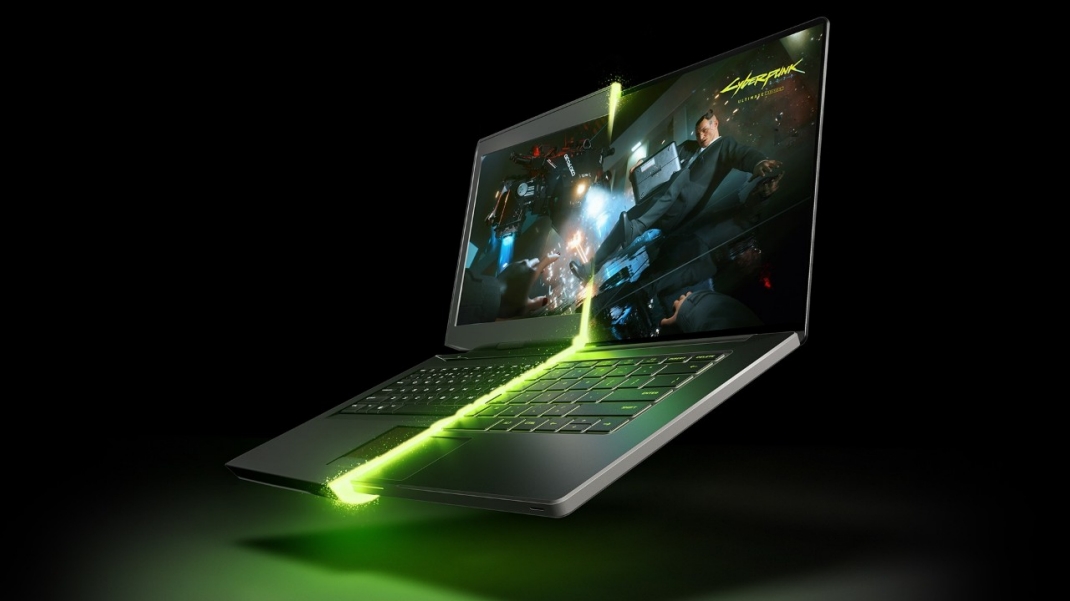
Collaboration with MediaTek and ARM architecture
NVIDIA’s upcoming laptop chips are expected to be developed in collaboration with MediaTek and based on ARM architecture. This is a logical choice given ARM’s strength in performance per watt, a critical factor for mobile devices.
This partnership is not new. NVIDIA and MediaTek have previously collaborated in the automotive sector, and expanding into laptops signals a broader long-term strategy.
Key specifications to watch
NVIDIA’s laptop SoCs, reportedly named N1X and N1, have already appeared on benchmarking platforms, indicating an imminent launch.
Notable expected specifications include:
• Built on a 3nm process by TSMC
• Up to 20 CPU cores with clock speeds reaching 4 GHz
• Integrated GPU based on the Blackwell architecture
• Around 6144 CUDA cores on the high-end variant
• TDP of approximately 120W, comparable to current competitors
These specifications suggest that NVIDIA is targeting not only AI workloads but also strong performance for gaming and demanding applications.
What is NVIDIA aiming for?
Unlike Intel and AMD, NVIDIA is pursuing a “full-stack AI” strategy, controlling both hardware and software. This enables deep optimization across AI models and compute performance.
If NVIDIA successfully brings these SoCs to market, it could:
• Make AI a default feature on personal devices
• Extend its AI ecosystem to the edge
• Build a competitive advantage that rivals may struggle to match in the short term
NVIDIA’s entry into the laptop market is not merely a product expansion, but part of a broader strategy to dominate the AI era. As AI PCs and edge AI continue to evolve, the competition between NVIDIA, Intel, and AMD is set to enter a new phase, where performance alone is no longer enough, and AI integration becomes the defining factor.
