A military conflict that erupted in the Middle East in late February 2026 between the United States, Israel, and Iran is rapidly spreading its impact beyond the energy sector. The global semiconductor industry is now beginning to feel the shock as risks of supply chain disruptions and rising production costs intensify.
One of the biggest concerns lies in the supply of rare gases and strategic chemicals used in chip manufacturing. The semiconductor industry relies heavily on helium and bromine, two materials that are critical in several stages of semiconductor fabrication.
Helium plays an essential role in photolithography, the technology used to etch microscopic circuits onto silicon wafers. It is also used in thermal control systems inside semiconductor fabrication plants. According to data from the U.S. Geological Survey (USGS), Qatar currently supplies more than 33% of the world’s helium. Geopolitical risks quickly became reality when the helium refining facility at Ras Laffan Industrial City operated by QatarEnergy was attacked by drones and forced to suspend operations.
Experts warn that if tensions escalate and shipping routes through the Strait of Hormuz are disrupted, roughly 25% of the global helium supply could disappear from the market. Such a scenario would place significant pressure on semiconductor production lines that depend on the gas.
In addition to helium, the supply of bromine is also facing potential disruption. Around two thirds of the world’s bromine production is concentrated in Israel and Jordan. The chemical is widely used in various material processing steps and semiconductor component manufacturing.
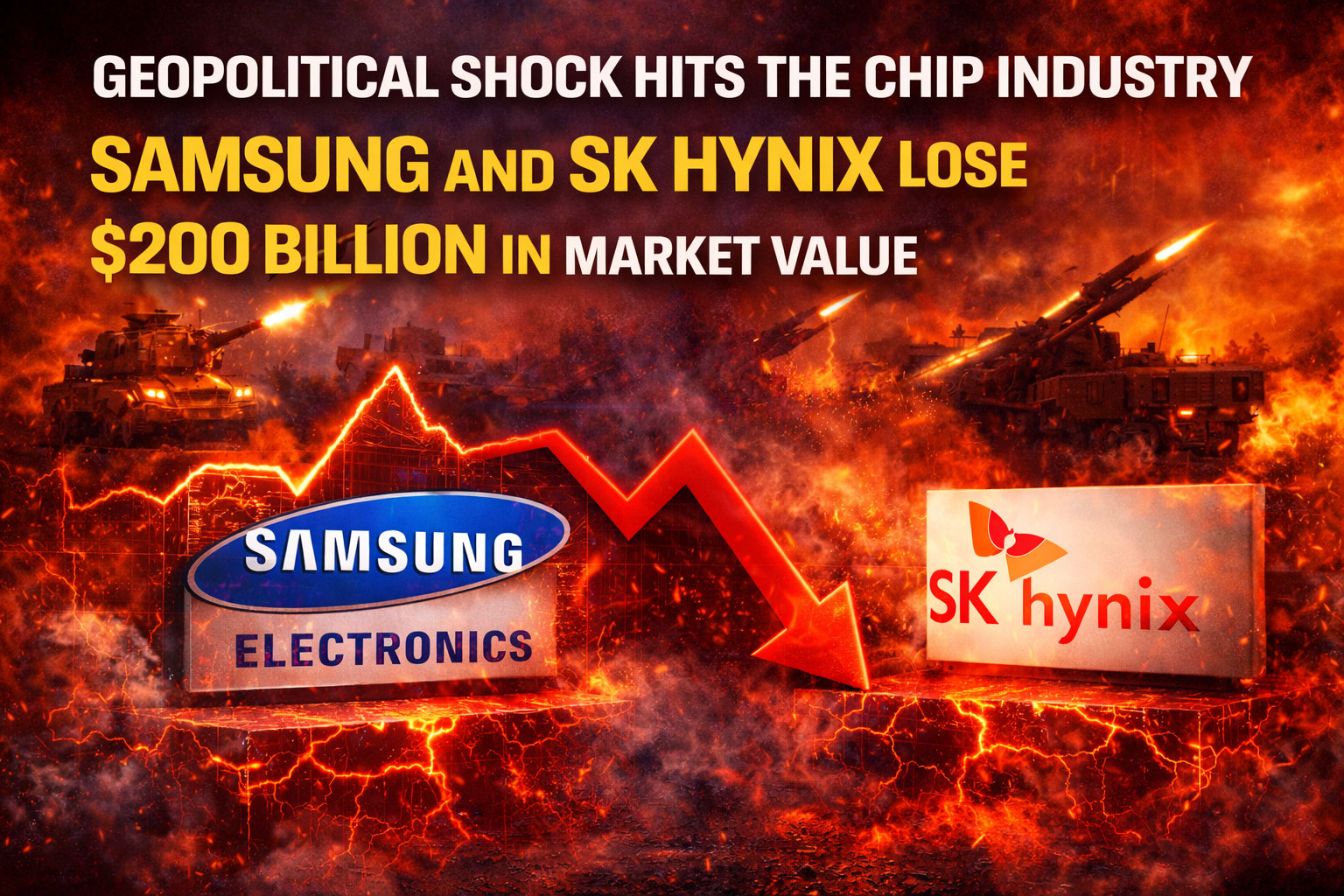
These risks have already begun to reflect in financial markets. Shares of the world’s two largest memory chip manufacturers, Samsung Electronics and SK Hynix, have fallen sharply, wiping out more than $200 billion in combined market value since the conflict began. The VanEck Semiconductor ETF, which tracks global semiconductor stocks, has also declined by about 3%, signaling growing caution among technology investors.
Beyond material supply risks, the surge in energy prices is adding another layer of pressure to the technology sector. Brent crude oil has surpassed $100 per barrel, raising concerns about operating costs for artificial intelligence data centers.
AI server clusters operated by major technology companies such as Microsoft, Amazon, and Google consume three to five times more electricity than traditional data centers. As energy costs rise, the total cost of building and operating AI infrastructure also increases, forcing tech companies to be more cautious about expansion plans.
This dynamic is particularly sensitive for memory chip manufacturers. In recent years, booming demand for high bandwidth memory (HBM), a critical component in AI GPU systems, has driven record prices and strong profits for Korean firms such as Samsung and SK Hynix.
In the short term, many analysts believe the impact remains manageable because HBM supply contracts are typically signed months in advance. However, if the conflict drags on and slows investment in AI data center infrastructure, demand for memory chips could weaken in the coming quarters, potentially triggering a new adjustment cycle across the global semiconductor industry.
