The rapid rise of artificial intelligence is reshaping the semiconductor market, bringing CPUs back into the spotlight. At the Morgan Stanley Technology, Media & Telecom Conference 2026, both Intel and AMD reported a significant increase in CPU demand, largely driven by the growth of next-generation AI systems.
According to Intel CFO David Zinsner, “the CPU has become cool again this year.” The reason lies in the architecture of modern AI systems. While GPUs handle most of the heavy computational workloads, AI agents still rely on CPUs to orchestrate the entire process. CPUs manage complex tasks and coordinate workloads across GPUs, NPUs, and other accelerators in large-scale AI infrastructures. Demand has grown so quickly that Intel has already begun discussing long-term CPU supply agreements with customers to ensure stable chip availability.
AMD is seeing a similar trend. CEO Lisa Su noted that CPU demand has increased significantly due to the growing scale of AI inference workloads. She also emphasized that the CPU segment of AMD’s business “has far exceeded expectations in terms of demand,” highlighting the continued importance of CPUs within AI infrastructure, even as GPUs receive much of the attention.
The current AI boom began in late 2022, when ChatGPT demonstrated the commercial potential of large AI models. In the early phase, the industry experienced a severe GPU shortage as hyperscalers and data centers rushed to purchase massive numbers of GPUs to build large-scale AI clusters containing hundreds of thousands of accelerators.
By mid-2025, GPU supply had gradually stabilized. However, the pressure soon shifted to other components, particularly memory and storage. AI data centers require large amounts of high-bandwidth memory (HBM) and enterprise-grade SSDs, pushing the RAM and SSD markets into a strong price surge from the fourth quarter of last year through early 2026.
Unlike the GPU shortage, shortages in memory and storage have a much broader impact. GPUs primarily affect gaming PCs and high-end workstations, while RAM and SSDs are essential components in nearly every modern digital device, including smartphones, smart TVs, automobiles, and industrial systems. In addition, consumer and enterprise memory products compete for the same wafer capacity, even though enterprise-grade components typically carry significantly higher margins.
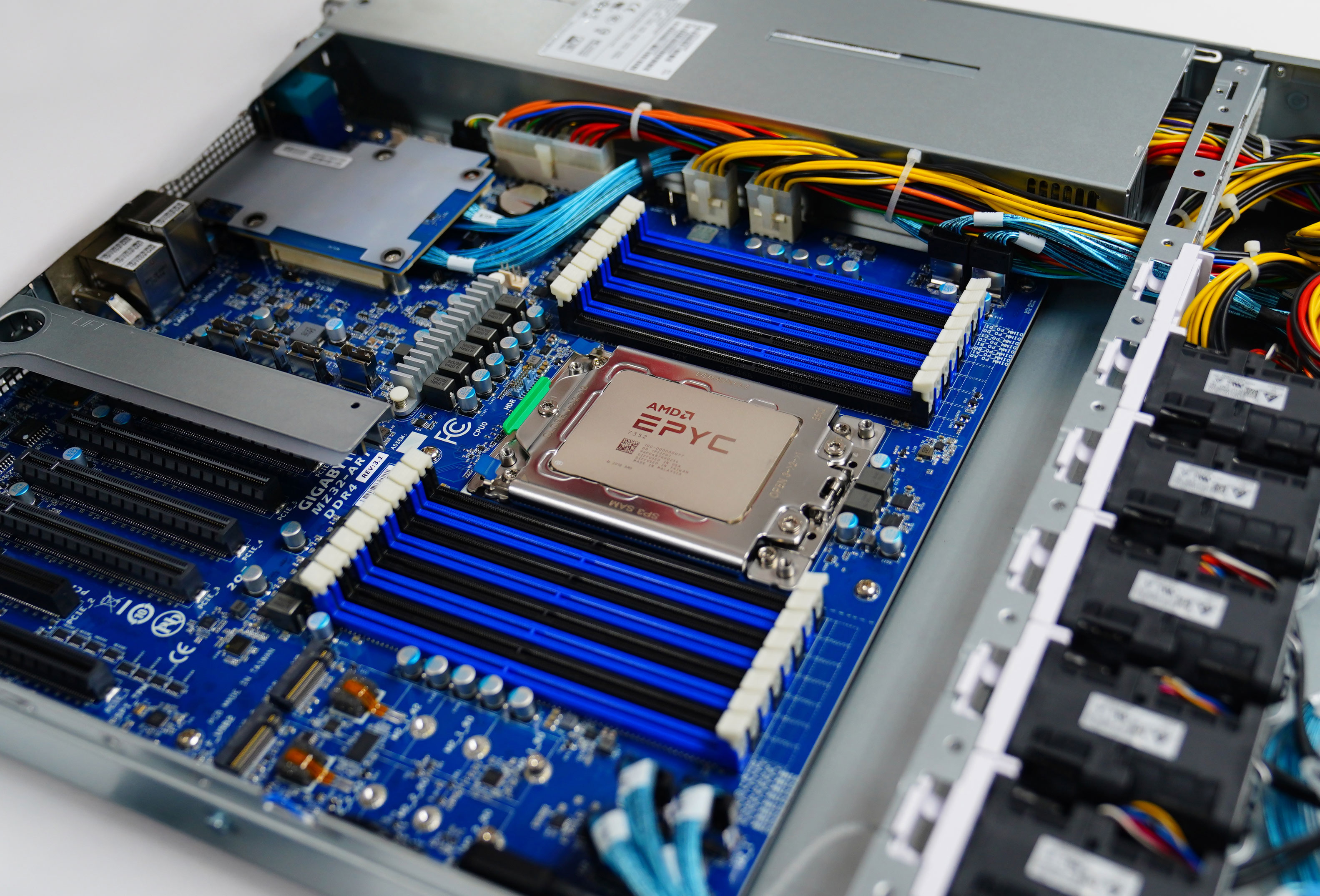
As AI evolves from chatbots and large language models into more advanced AI agents capable of observing, reasoning, planning, and acting independently, data centers require increasingly powerful multi-processor computing environments. This means combining CPUs, GPUs, NPUs, and other accelerators to support the full AI workflow.
Some regions are already experiencing the impact of this demand surge. In China, both Intel and AMD have reported shortages of server CPUs. At the same time, demand is rising for compact yet powerful systems such as high-end Mac Studio and Mac mini models, as more developers experiment with running local AI agents using open-source projects.
Despite this surge, the current increase in CPU demand is still largely driven by the data center market. Consumer systems typically lack the massive memory capacity required for advanced AI agents. Nevertheless, if supply constraints continue, shortages could eventually spill over into the consumer market as well.
Over the past several generations, Intel and AMD have converged their CPU architectures across both data center and consumer platforms to maximize manufacturing efficiency. This approach allows chips unsuitable for data center deployment to be redirected to the consumer market. However, if data center demand grows significantly, chipmakers may prioritize that segment, similar to what has already happened with RAM and SSD supply.
Unlike NVIDIA, whose data center revenue has grown exponentially, both AMD and Intel still rely heavily on the consumer market, which accounts for roughly half of their quarterly revenue. As a result, even with rising AI demand, neither company is likely to abandon the PC market entirely.
Still, some analysts warn that if AI-driven pressure on the semiconductor supply chain continues, entry-level PCs could gradually disappear by 2028. This makes the ability of Intel and AMD to expand manufacturing capacity in the coming years a critical factor for the future of the global computer industry.
