While the semiconductor industry remains focused on tightening supply and demand conditions in memory chips, the global server market has raised a new warning signal. According to international media reports, the supply of Intel and AMD EPYC processors has “tightened significantly” in several markets. Lead times for certain CPU models have increased from around four weeks to as long as 16 weeks, while prices have surged by 20% to 35%.
Distribution channels confirmed that since December 2025, Intel has implemented an allocation quota system for server CPUs in certain countries. Quarterly shipments have declined by approximately 30% compared to the same period in 2024.
Although AMD has not officially announced restrictive measures, its high-end EPYC processors — including Milan and Genoa — are being prioritized for North American cloud service providers. As a result, allocations to other markets have been reduced by roughly 25%.
A procurement executive at a major server ODM revealed that his company previously received about 50,000 Xeon CPUs per quarter, but is now allocated only 30,000 units. The remaining demand must either wait until the following quarter or be fulfilled through the spot market at higher prices.
As early as January this year, during an earnings call, Intel’s CEO warned that CPU supply was becoming increasingly tight. According to the company, the rapid expansion of AI has not only boosted demand for specialized accelerators but also created a “spillover effect,” driving unexpectedly strong demand for high-performance CPUs in data centers.
Intel projects that first-quarter inventory levels will fall to historic lows. Although the company is adjusting its production strategy, supply improvements may take throughout 2025 and could even extend into 2026.
Industry sources indicate that both Intel and AMD have formally notified customers in China about severe server CPU shortages. Some high-end Intel models may face lead times of up to six months.
The imbalance between supply and demand has directly impacted market pricing. Industry data shows that in certain countries, Intel server CPU prices have risen by more than 10% on average due to quota-based allocation policies. While actual increases vary depending on long-term contracts, the overall upward cost trend appears irreversible.
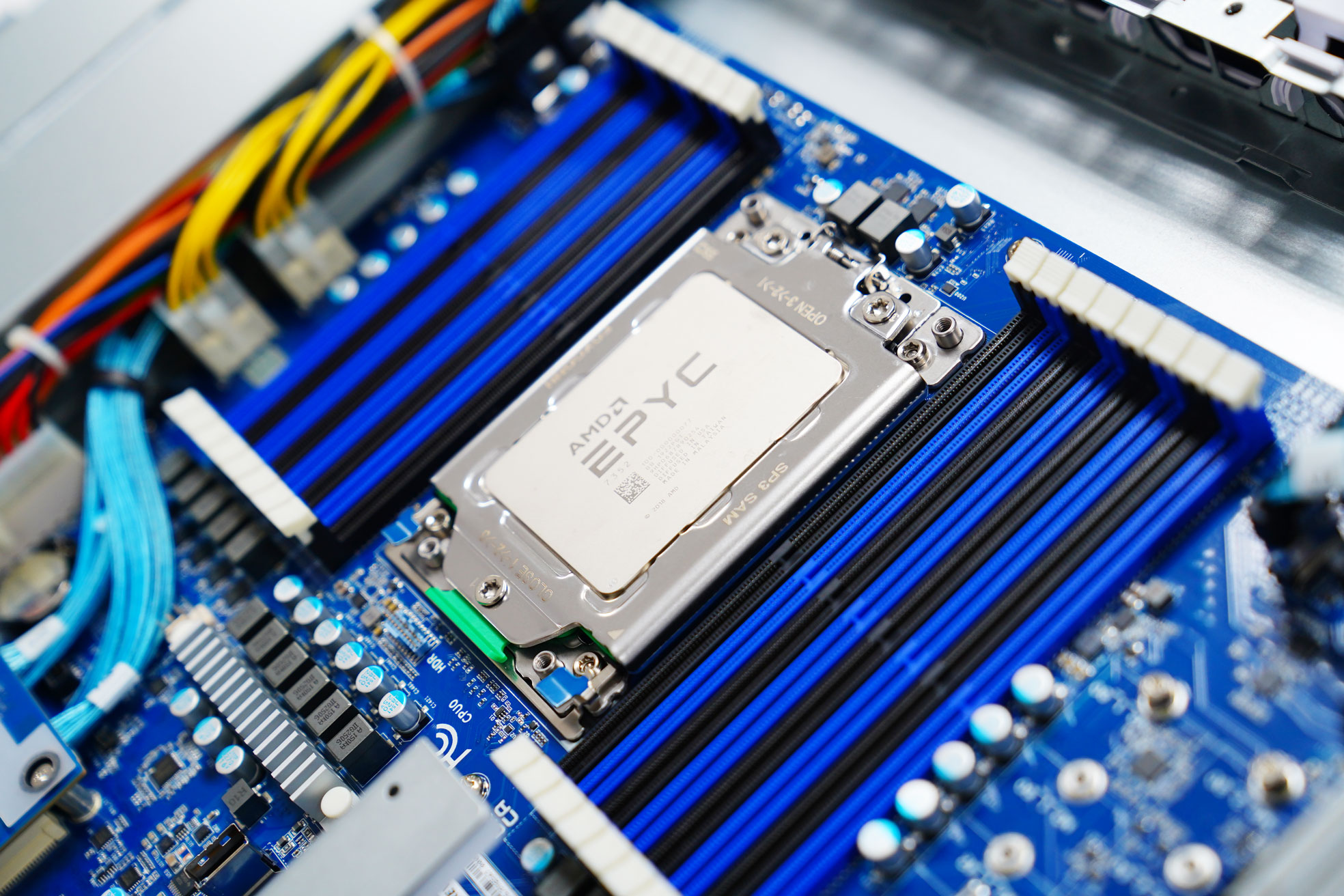
A deeper look at the market structure shows that shortages are concentrated primarily in next-generation, high-performance products. In several regions, Intel’s fourth- and fifth-generation Xeon processors are particularly scarce, forcing the company to prioritize key strategic customers. Even so, backlogs remain substantial.
Meanwhile, AMD has also seen lead times for certain server products extend to 8 to 10 weeks.
Intel and AMD continue to dominate the global server CPU market, although the gap in market share is narrowing. A January report from UBS indicates that Intel’s market share declined from over 90% in 2019 to around 60% in 2025, while AMD’s share increased from roughly 5% to over 20%. However, amid the current supply crunch, customers often find themselves in a situation where “even with money in hand, product availability is not guaranteed.” The competitive battle between the two giants is temporarily overshadowed by capacity constraints.
In China, major customers for both companies include large server manufacturers and cloud service providers such as Alibaba and Tencent.
The recent surge in AI infrastructure investment has not only fueled demand for dedicated AI chips but has also placed pressure across the broader supply chain. CPU shortages are intensifying and could create multiple challenges for AI companies as well as other manufacturers.
The causes of the shortage are multifaceted. Intel continues to face difficulties in ramping up output due to manufacturing yield challenges. AMD relies on TSMC for production, but the leading foundry is prioritizing advanced-node capacity for AI accelerators, limiting available CPU manufacturing capacity.
Additionally, memory chip shortages — another critical server component — have worsened the situation. A distributor that sells both server CPUs and memory products noted that when memory prices began rising in China late last year, customers accelerated CPU purchases in order to lock in lower memory costs.
The rapid growth of agentic AI systems, which are capable of executing complex multi-step operations rather than simple conversational tasks, has further intensified CPU demand, as these advanced applications require significantly greater processing power than traditional workloads.
